What Makes Local Orbit Different? 5 Differentiators That Actually Move Local Revenue
By now you have probably seen a dozen local SEO offers. Listings management, citation cleanups, keyword reports, maybe an "AI add-on" bolted onto the invoice. On the surface they all sound alike, which makes it genuinely hard to tell why Local Orbit exists at all, let alone why businesses choose it over a cheaper monthly package.
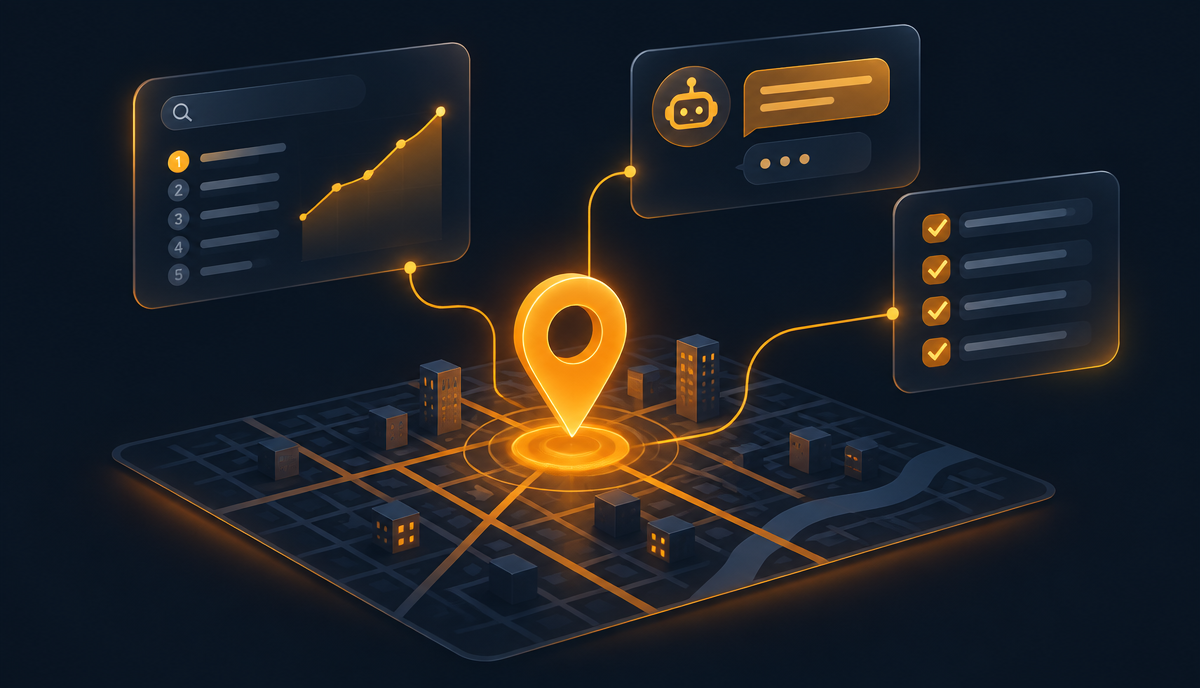
Local Orbit is our growth system for local businesses that need to win in two places at once: classic Google local search, and the AI assistants people increasingly ask instead of searching. This post is not a sales page. It is a plain breakdown of the five things that make Local Orbit structurally different from typical local SEO services, so you can judge the fit for yourself. If you want the full method, stage by stage, the Local Orbit growth system page covers all of it, including how the monthly engagement actually works.
1. Architecture Before Activity
Most local SEO services start with a task list: optimize the profile, build citations, publish some posts. Activity is easy to sell and easy to bill for, but activity without structure scatters.
Local Orbit starts by planning how your site should be built before any ongoing work begins. Topical silos, conversion copy, trust pages, and technical foundations are sequenced first so that everything published afterward compounds. Month two builds on month one instead of repeating it. This matters more than it sounds, because a site with strong architecture ranks for far more queries from the same amount of content than a site where pages compete against each other with no internal logic.
This is the same trust-first foundation Google's recent updates reward, which we covered in our breakdown of the trust-first algorithm reshuffling local search.
2. Built for a Two-Layer Search Reality
Traditional local SEO targets Google Maps and organic local results. That layer still matters, and it still drives most local leads today. But a growing share of customers now ask ChatGPT, Perplexity, and Gemini for local recommendations, and AI visibility runs on different authority signals than classic rankings.
A service that addresses only the traditional layer is solving half the problem, and it is the half growing slowest. Local Orbit treats AI recommendation visibility as a first-class deliverable with its own measurement, not as a bonus metric mentioned in a report once a quarter.
3. AI Visibility You Can Measure, Not Guess At
Most agencies that claim to "do AI SEO" cannot tell you whether a client is actually being recommended by an AI assistant, or whether that visibility improved this month. There is no tracking, so there is no accountability.
Local Orbit runs a structured AI visibility measurement each month: five prompts relevant to your category, across four to five AI platforms, three to five runs each. That produces a real baseline and a trend line. You can see whether your business is being named, by which platforms, for which questions, and whether the work is moving that number. It is the same discipline we used to build Pentagon Air into the most AI-trusted HVAC brand in its market.
4. One Integrated System Instead of a Stack of Point Solutions
Assemble the typical local marketing stack yourself and you end up with a Google Business Profile vendor, a content writer, a link builder, a web developer, and someone who claims to handle AI. None of them see the whole picture, and every handoff loses context.
Local Orbit bundles the monthly work into one sequenced system with one owner: content production, four backlinks per month, Google Business Profile work, digital PR, technical fixes, and AI visibility runs. Because the same team does the architecture, the content, and the authority building, internal links point where they should, content targets the silos that were planned, and the links reinforce the pages that convert. You are also not paying five separate margins for five separate vendors.
5. A Diagnostic Start That Changes the Plan
Fixed onboarding checklists ignore the single highest-leverage truth in local marketing: your biggest gains depend on your specific starting point. A business with a strong site but no backlinks needs a different plan than one with great authority and a broken conversion path.
Every Local Orbit engagement opens with the diagnostic audit, the AI Invisibility Audit. Its findings decide what happens first, second, and third. If the audit shows your visibility gap is trust signals rather than content volume, the plan reflects that. The audit is also available on its own if you want the diagnosis before committing to an ongoing system.
What the Monthly Work Actually Looks Like
To make the differentiators concrete, here is what a typical month inside Local Orbit includes:
- Content: new pages and articles mapped to the topical silos planned in the architecture phase.
- Authority: four quality backlinks per month plus digital PR placements that AI assistants and search engines both recognize.
- Google Business Profile: ongoing optimization, posts, and review strategy for the map pack.
- AI visibility: the five-prompt tracking runs across four to five platforms, with work adjusted based on what the runs show.
- Keyword tracking: a focused set of ten keywords that matter to revenue, not a vanity list of hundreds.
Every deliverable traces back to the architecture and the audit. Nothing is generic filler.
Who Local Orbit Fits, and Who It Does Not
Local Orbit is built for local and service businesses, roughly between $500,000 and $10 million in annual revenue, that depend on being found in local search and recommended by AI assistants when customers are ready to buy.
It is not a fit for everyone. National e-commerce brands with no geographic footprint do not need a local growth system. And a business owner who wants a set-and-forget retainer with a pretty report will not get value from a system that expects the diagnosis to shape the work. If you are comparing it against other options, our Local Orbit vs. general agency comparison and the tool vs. service breakdown cover those trade-offs in detail.
How to Pressure-Test Local Orbit Against Your Other Options
Do not take this post as the verdict. Run every option on your list, including Local Orbit, through the five questions in our local SEO comparison framework: does it cover both search layers, does it start with a diagnostic, can it show revenue attribution, can it show a comparable client result, and is it focused on your specific problem?
Vendors with strong, consistent results answer those questions with evidence. That is the standard Local Orbit was built to meet, and it is the standard we would want you to hold any provider to, including us.
See the Full Local Orbit System
The Local Orbit growth system page walks through the nine-stage method, the exact monthly work, the AI visibility metrics, and who the system is designed for, along with what it costs and where most customers land. If you would rather talk it through, you can schedule a call with our team or start with the full range of SEO, PPC, and web design services to see where Local Orbit fits in the lineup.

Kyle Barron
Founder, Moon Vibes Media · Digital marketing strategist helping businesses grow with clarity and purpose.